
Structural Concrete Repair vs. Full Replacement: Which Makes Sense for Your Project?
A cracked parking deck, a spalling foundation, or a failing warehouse slab all lead to the same decision, one that affects your budget and how long the fix actually lasts. Structural concrete repair and full replacement sit at opposite ends of the spectrum, and each makes sense under different circumstances.
Knowing which one fits your project starts with understanding where your structure actually stands today.

Structural Concrete Repair and Full Replacement Solve Different Problems
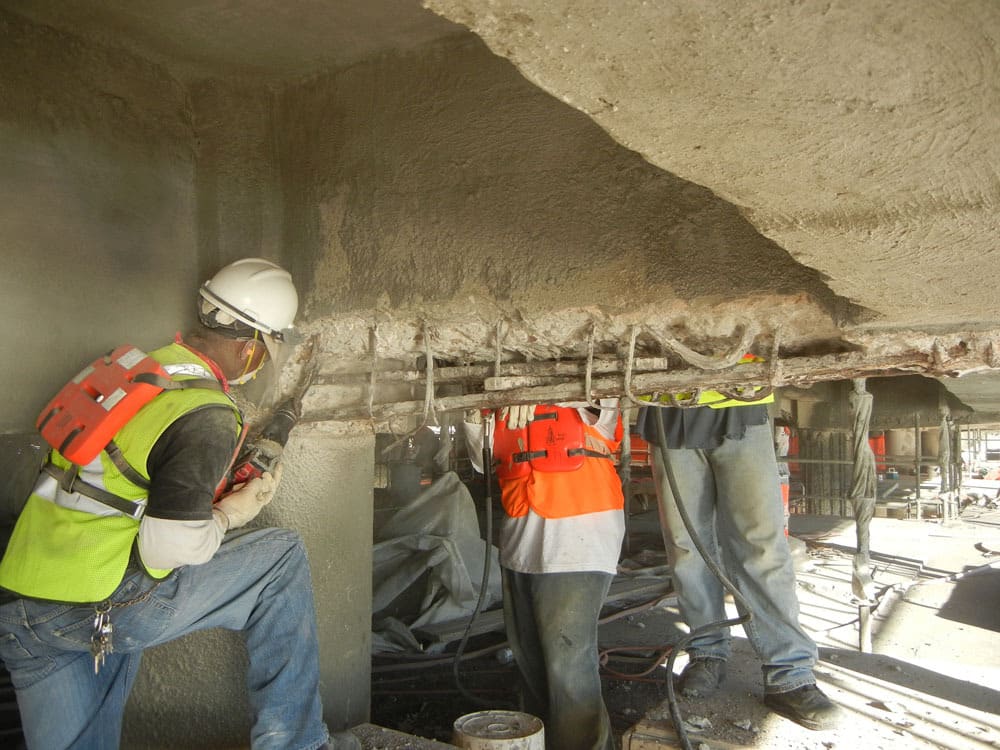
Structural concrete repair targets damaged sections of an existing structure through methods like epoxy injection, carbon fiber reinforcement, and shotcrete, restoring strength without removing what's already standing.
Full replacement, on the other hand, removes the damaged concrete entirely and rebuilds the structure from scratch. Repair works when damage stays contained to specific, identifiable areas. Replacement becomes the answer once deterioration spreads beyond what those repair methods can address.

How Far the Damage Has Spread Often Decides the Approach
Small, isolated cracks or surface spalling on a parking deck or slab rarely threaten the structure as a whole, and repair methods handle these cases effectively.
Once damage spreads across multiple structural members or reaches load-bearing elements like beams and columns, repair can no longer guarantee the strength the structure needs.
In other words, isolated damage points to repair. Widespread structural damage points to replacement.
Repair Costs Less Upfront, But Replacement Can Cost Less Over Time
Repair carries a lower price tag because crews address specific damaged areas rather than removing an entire structure. That lower upfront cost comes with a shorter service life in cases of extensive deterioration, which can mean paying for repairs again within a few years.
Replacement costs more initially but resets the service life completely, making it the better long-term value for structures near the end of their lifespan.
Current Building Codes Can Sometimes Rule Out Repair Entirely
Building codes change over time, and an older structure may no longer meet current seismic, load, or fire-safety requirements. Repair only restores a structure to its original design specifications, so it cannot bring an outdated structure into compliance with updated codes.
When code upgrades are the driving concern, replacement is typically the only path that satisfies current requirements.
Most Projects Point to One Clear Answer
The three factors above – damage spread, cost, and code compliance – usually point in the same direction. Match your project against these questions to find your answer.
- Is the damage isolated to a small area, or has it spread to structural members like beams and columns? Isolated damage favors repair. Damage that reaches structural members favors replacement.
- Do you need the lowest cost right now, or the best value over the life of the structure? Repair wins on upfront cost. Replacement wins on long-term value for structures nearing the end of their service life.
- Does your structure need to meet current building codes? Repair keeps the original design in place. Replacement is the only way to bring an outdated structure into full compliance.
FAQs About Structural Concrete Repair vs. Full Replacement
Corrosion of embedded steel, weather exposure, and heavy structural loads all contribute to concrete deterioration over time. Chemical exposure in industrial settings accelerates the process further.
In many cases, yes. Repair works well when damage stays limited to specific, accessible areas rather than spreading through the structure's core support system.
Timelines depend on the extent of damage, but most repair projects finish faster than a full replacement and cause less disruption to daily operations.
Get a Professional Assessment Before You Commit to Either Path
Epoxy Design Systems has repaired and restored concrete structures for commercial, industrial, and civil clients since 1977, using ACI- and ICRI-compliant methods across more than 5,500 projects.
When repair is the right call for your structure, our technicians handle the assessment, the plan, and the work itself. Contact us to find out which path fits your project.
Relevant Reading
Looking to learn more about a specific repair method or issue? Browse our related resources below for deeper insights into structural concrete repair, spall repair, crack injection, and other services we offer.
Compare structural concrete repair and full replacement to find the safer, more cost-effective choice for your commercial or industrial structure.